Thursday, July 25, 2019

Book of Daniel may identify Darius the Mede by chiasmus


by
Damien F. Mackey
“Through chiasmus, once again, it may tell us exactly who [Darius the Mede]
was by mirroring him with his alter ego monarch of a different name”.
This article has a parallel in my:
Toledôt Explains Abram's Pharaoh
{Toledôt and chiasmus, the keys to the structure of the Book of Genesis,
may lead us to a real name for this “Pharaoh”.}
In that article I was been able, with the benefit of the toledôt and chiastic structures of the Abrahamic histories, written (or owned) by Ishmael and Isaac,
“These are the generations of Ishmael ...” (Genesis 25:12).
“These are the generations of Isaac ...” (Genesis 25:19).
(a)    to show that the two accounts of the abduction of Sarai/Sarah actually referred to just the one single incident, not two; and that
(b)   he who is called “pharaoh” in the first account (Ishmael’s) was the same as the “Abimelech” referred to in the second account (Isaac’s).
Thus the Bible does apparently name Abram’s Pharaoh!
Now Ishmael, whose mother was Egyptian, writes his account from an Egyptian perspective; whereas Isaac, who dwelt in Palestine, writes from a more northerly perspective. This difference in perspective, yielding two rather different accounts of just the one incident, if not appreciated by commentators, can lead them to conclude, but wrongly, that these were two quite separate abductions (thereby increasing the pain for Sarah).  
But, when the Abrahamic narratives are subjected to chiasmus, then it is found that “pharaoh” is perfectly mirrored by “Abimelech”.
The Bible, therefore, appears to be providing us with a key identification.
Although it does need to be noted that two names that intersect in a chiastic structure do not necessarily always identify each one named as being the same person.
Now to Darius the Mede.
Perhaps more important for commentators is the fact that the Book of Daniel provides the very same service in the case of the very enigmatic, but key, Darius the Mede. Through chiasmus, once again, it may tell us who he was by mirroring him with his alter ego monarch of a different name. See James B. Jordan’s brilliant chiastic structuring of Daniel 6 on p. 314 of
The Handwriting on the Wall
Hence, as many have suspected (e.g. George R. Law, Identification of Darius The Mede:  
http://readyscribepress.com/home_files/DtM-Daniel_5_30-31.pdf.), Darius the Mede is the same as Cyrus the Persian.
The Bible seems to point it out for us.
Now, the Apocrypha provides a further confirmation of this identification with another account of Daniel in the lions’ den. Here Darius the Mede is presented as Cyrus. This again, like with the abduction of Sarai/Sarah, is a case of the same story being told by two different authors, quite differently. But it is nevertheless about the one same incident. All of the main protagonists are there in both accounts. Biblical scholars ought easily to be able to reconcile the two with sufficient care and attention to detail.
Just as God would assure that his beloved Sarah was never going to be abducted twice, so would he assure that his beloved Daniel had only once to endure the den of lions.

Wednesday, July 24, 2019

King Cyrus favoured as ‘Darius the Mede’


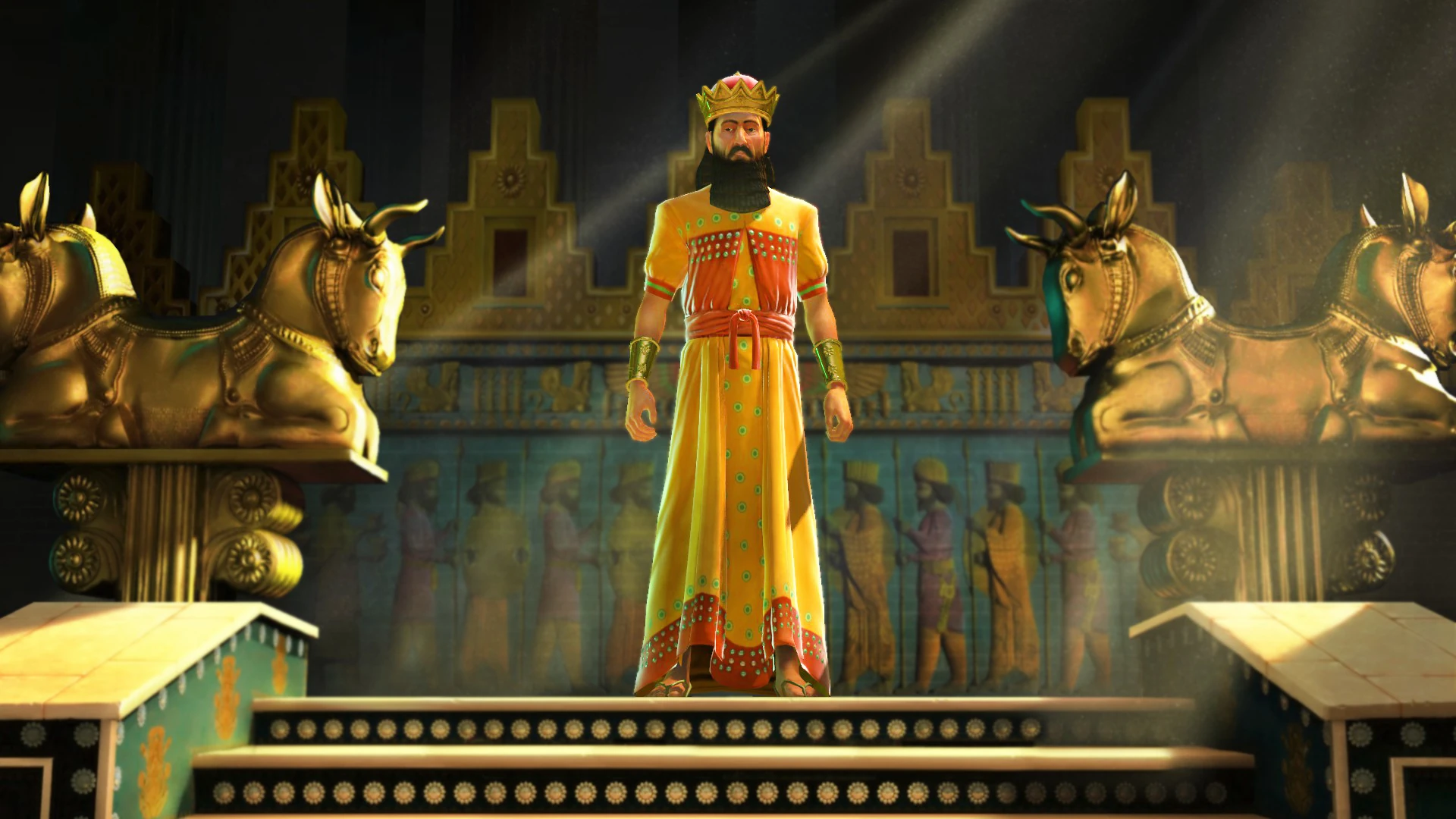
Darius I (Civ5)
          
by


Damien F. Mackey


“The author might be using the approximate age of Darius, sixty-two (62),

to emphasize the prophecy of the seventy weeks determined

upon Israel and Jerusalem (Dan 9:24).

This prophecy of the seventy (70) weeks is divided into three segments:

seven (7) weeks + sixty-two (62) weeks + one (1) week (Dan 9:25-26)”.


George R. Law


By now I have concluded in various articles that the enigmatic biblical king, ‘Darius the Mede’ (e.g. Daniel 5:31), was likely the same as King Cyrus ‘the Great’.

One of these articles involved my connecting, as just the one incident, both the prophet Daniel in the den of lions at the time of Darius (Daniel 6), and Daniel’s ordeal in the den of lions in the time of Cyrus, as narrated in Bel and the Dragon. And so I asked:  


Was Daniel Twice in the Lions' Den?


and I concluded that, no he wasn’t – and that Darius must be Cyrus.


George R. Law is another who has come to the conclusion that Darius the Mede was Cyrus, though using different means. In his 2010 article, “Identification of Darius the Mede” (p. 9), Law surprisingly suggests a link between the age of Darius, 62 years, and the 62 weeks of the prophecy of the Seventy Weeks:


God’s decree took the kingdom from Belshazzar and gave it to Darius the Mede, who actively received the kingdom.

In the introduction of Darius the Mede, there is an incidental hint, the approximate sixty-two-year-old age of Darius. The identification method employed in chapter four of this dissertation shows the value of knowing someone’s age and using it as an identifying mark.

The matching of the age of Cyrus the Great with the age of Darius the Mede was a significant qualifying characteristic which helped to identify Cyrus as Darius the Mede, but there might be another reason why the author provided this hint.

This number, which is otherwise extraneous information, is specific to three things in

the book of Daniel: 1) Darius, 2) Cyrus, and 3) the prophecy of the weeks. The author might be using the approximate age of Darius, sixty-two (62), to emphasize the prophecy of the seventy weeks determined upon Israel and Jerusalem (Dan 9:24).

This prophecy of the seventy (70) weeks is divided into three segments: seven (7) weeks + sixty-two (62) weeks + one (1) week (Dan 9:25-26). Cyrus, the 62-year-old conqueror, gave the commandment granting the Jews permission to return to the land and to rebuild their temple in Jerusalem. In Daniel 9:25, after a commandment is given to initiate the restoration of Jerusalem and its temple, and after the conclusion of the prophesied 62 weeks, that temple, which Cyrus commanded to rebuild, is to be destroyed. The link between the 62-year-old Darius the Mede and the 62-year-old Cyrus the Great reinforces this prophecy concerning the 62 weeks which is to pass before the new Temple will be destroyed. ….

[End of quote]


Whilst I think that George R. Law has rightly concluded that Darius the Mede is to be identified with Cyrus, his suggested connections here seem to me to be rather tenuous.


Good luck to anyone hoping to identify the biological age of Cyrus in the present state of knowledge of Medo-Persian history.


And, do 62 weeks really separate the beginning of the reign of Cyrus from the destruction of the new Temple?


Monday, July 22, 2019

Queen Esther reverses Jezebel


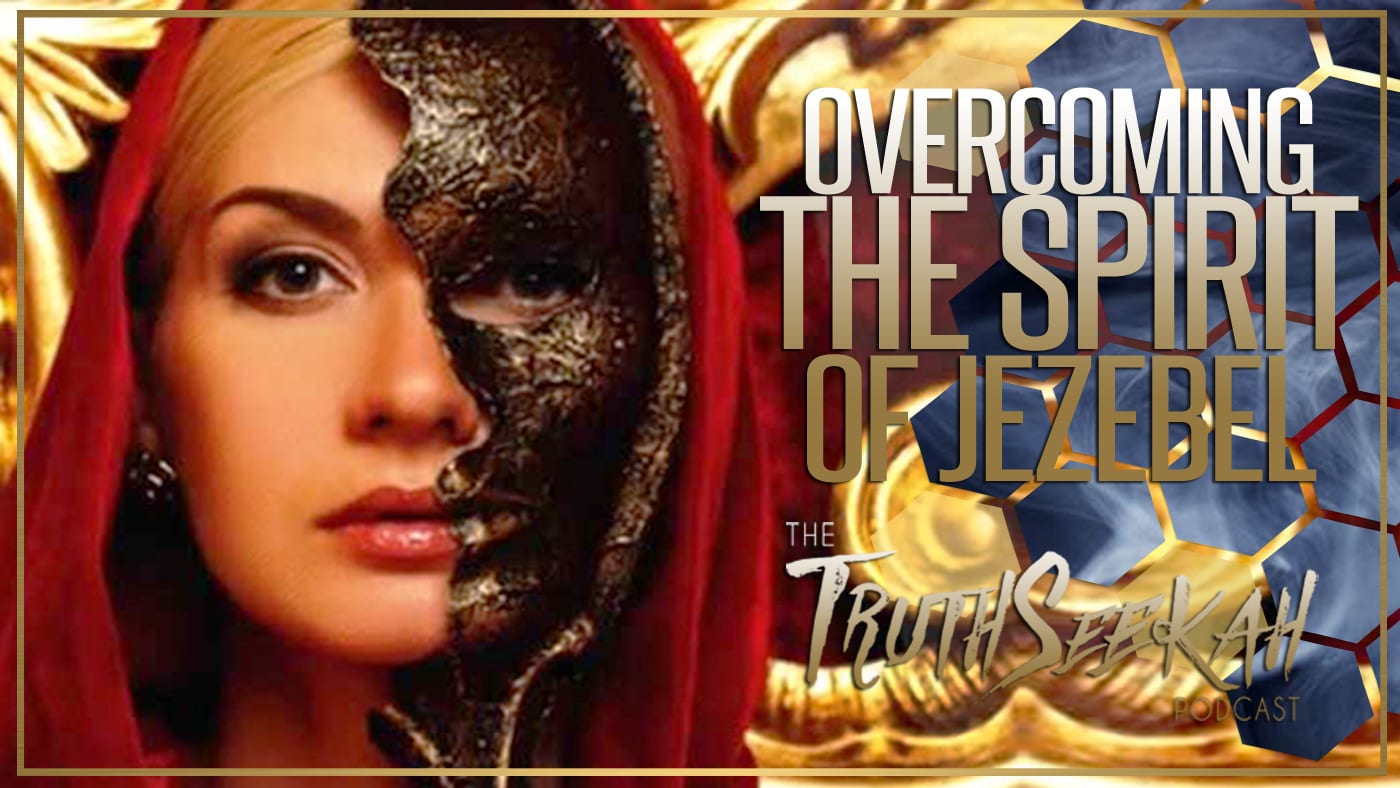
Overcoming The Spirit of Jezebel | TruthSeekah & Michael Basham 


“[Esther] is fully visible, unlike Jezebel, but her intentions are concealed from the beholder. Esther is also beautiful, a familiar attribute of matriarchs in the [Hebrew Bible]. ….
Jezebel lacks a face and a figure, as though she is made of an evil spirit alone”.
 
Helena Zlotnick


At: http://prophetess.lstc.edu/~rklein/Documents/Zlotnick.htm we read this intriguing contrast and comparison, by Helena Zlotnick (2001), of two famous biblical queens, Jezebel and Esther:

 
Helena ZLOTNICK
Biblica 82 (2001) 477-495
 
From Jezebel to Esther:
Fashioning Images of Queenship in the Hebrew Bible


…. At the heart of this study stands the hypothesis that the story of Esther and Ahasuerus must be read as a rehabilitative narrative of the tale of Jezebel and Ahab. To be exact, the narrative of Esther, if read sensibly and sensitively, bears unmistakable allusions to that of Jezebel. Both share an ideological kinship that aspires to define the desired characteristics and behavior of Israelite/Jewish queens.
An investigation into the use of Jezebel as a shadowy foil to Esther highlights biblical (redactional) ideas regarding queenly images, queenly spheres of influence and the molding of ‘Israelite’/Jewish queens ….
 
I. The Royal Wife: Queens as Protagonists
 
Jezebel is remembered, above all, for her role in the famed episode of the vineyard of Naboth (1 Kgs 21) …. The story begins with direct negotiations between two men, a king and his subject, Ahab and Naboth, over the legal acquisition of a plot of land adjacent to a royal residence. The exchange is terminated with Naboth’s insistence on the inalienable character of his property. His refusal to comply with the king’s desire leaves Ahab with two options: he can abandon his rosy visions of a palatial garden (21,2) or he can exert his authority to prevail, by hook and by crook, over the scruples and the objections of Naboth. The king chooses neither. Returning home from his unprofitable dialogue with Naboth he retires to his bedchamber in a foul mood and plunges into a fast ….
As the scene shifts from the outside with its vineyards and hypothetical gardens to the royal bedroom the queen enters the picture. Her ‘credentials’ had already been established. Readers had been familiarized with this Sidonian princess as the moving spirit behind her husband’s devotion to the Baal (16,31), and as the mortal enemy of YHWH’s prophets (18,4.13)…. The fact that Ahab’s marriage with her also signaled the acceptance of the Omrides by their neighbors was deemed irrelevant by the biblical redactor. Yet, with the exception of Solomon, only Ahab achieved the kind of ‘international’ status that made him a desirable match in the eyes of neighboring kings.
Jezebel’s intrusion into Ahab’s self-imposed solitude re-enacts the tale of the vineyard verbally and in the intimacy of the royal bedroom. Within this familial context Jezebel emerges as the king’s solicitous spouse rather than as a bearer of idolatry. Her question, ‘What is the matter with you and why are you not eating’ (1 Kgs 21,5), supports this image. Ahab replies with a distorted version of the words exchanged with Naboth. According to his presentation Naboth was guilty of obstinacy if not of disobedience through an unreasonable refusal of complying with the king’s seemingly reasonable request.
On the surface, this brief and rare glimpse into a royal marriage reveals a model of spousal relations and an inordinate degree of marital harmony and trust …. Ahab admits his weakness to a sympathetic wife expecting, presumably, support and understanding. She expresses perhaps indignation perhaps surprise and promises the fulfillment of his desires. He refrains from probing her promise. Even before this bedroom snapshot the text refers to the couple’s closeness and her status, in spite of Ahab’s other wives. He shares with her not only her gods but also information about the management of the kingdom, including the difficulties attendant on the maintenance of correct relations with YHWH’s prophet, Elijah (1 Kgs 19,1). She issues a death threat to Elijah that effectively undermines Ahab’s conciliatory politics and demonstrates her standing at the court.
How extraordinary was the association of an ‘Israelite’ queen, even of foreign descent, with unlimited accessibility to the king can be fully appreciated through the fashioning of royal intimacy in the scroll of Esther …. Only three royal couples in the … [Hebrew Bible], Jezebel and Ahab, Esther and Ahasuerus, David and Bathsheba, are seen, or rather heard in direct verbal communication. But the nature of Bathsheba’s intercession is dictated by motherly and not by wifely concerns. Her appearance in the king’s bedroom, where another woman had been occupying the king’s bed, is carefully orchestrated by a prophet. She is neither Jezebel nor Esther.
Like Jezebel, Esther is one of many royal consorts. Unlike Jezebel, when Esther approaches her royal husband she is not only afraid of the consequences of appearing without summons but she also behaves as a humble petitioner rather than a royal consort (Esth 4,11). Even in the privacy of her own rooms Esther has to tread carefully. After obtaining permission to stage a private banquet for the king and a favorite minister (Haman) she dares not bring up her grievance before plying Ahasuerus with drinks (Esth 7,1.2.7). And even then she waits till Ahasuerus seeks enlightenment regarding the identity of the author of the anti-Jewish measures in his kingdom.
When Esther exposes Haman Ahasuerus, like Ahab, retires in anger not to his bedroom but rather to an adjacent garden. That the scroll conjures up for the king’s inflamed spirit the exact same soothing landscape that Ahab had desired to create out of Naboth’s vineyard seems hardly a coincidence. Ahasuerus’ brief stroll in the queen’s garden is staged as a prelude to the climax of the plot and marks the end of Haman’s career. Ahab’s urge to enlarge the palace’s garden sets in motion a series of crimes and signals the demise of his dynasty.
Both the Dtr historian (= the redactor of 1 Kgs 21) and the author of the scroll cloth with mockery the marriages they delineate. The former casts the king’s bedroom as a launching pad for queenly crimes; the latter places the queen in bed with her enemy rather than with her lawful consort. In both narratives communications between king and queen, although direct, are marked by evasions and half-truths. Ahab and Jezebel communicate through deceptions. He provides an edited version of his dealings with Naboth while she avoids further delving into both his statements and her own strategies. Esther hides her true identity from Ahasuerus when she joins the harem. She also conceals her true intention from him when she solicits permission to hold a private banquet for Haman. If Ahasuerus believed his beautiful wife, a rather doubtful proposition, he elected to humor her by pretending ignorance.
An interplay between the words and the actions of the protagonists further reveals parallels between the tales of Jezebel and Esther. Jezebel reminds Ahab of his royal status only to undermine her own assertion by assuming kingly power. Mordechai, ostensibly a caring relative, reminds Esther of her position at the court solely to prompt her to use it in spite of danger to her life in obeying his order. Neither Ahab nor Esther, of course, requires the admonition. But the reminders also imply an admission of Mordechai’s own helplessness and of Ahab’s inability to deal with the situation. As the action shifts into the hands of the two queens the scroll is still careful to entrust the initial urging into the hands of a male relative, thereby ‘correcting’ the Dtr history that had cast Jezebel as the prompter and the actor.
A choice of seminal gestures and phrases in the scroll’s description of critical preliminaries appears to recall, somewhat perversely but accurately, the earlier narrative. When Esther hears that Mordechai has been seen donning mourning clothes at the gate of the palace she orders an inquiry into this seemingly inexplicable and apparently inexcusable public display (Esth 4,1-5). Jezebel addresses her grief-stricken and fasting spouse in a similar mode, likewise implying that his behavior is uncalled for. At the heart of the familial encounters on the eve of a crisis are two difficult phrases that emphasize the addressee’s status. ‘Who knows? Perhaps you have attained royalty for just such a time as this?’ (Esth 4,14) …. Jezebel addresses Ahab with a similarly pregnant question: ‘Do you now govern Israel?’ (1 Kgs 21,7). In both instances a rhetoric of timeliness is intended to spur the protagonists to action. Mordechai succeeds in coercing Esther to act; Jezebel becomes an actor rather than a prompter.
Structurally, the later narrative also encodes the making of Esther as a queen in a sequence that echoes Jezebel’s queenly progress. In the wake of the fateful exchange between Esther and Mordechai Esther, like Jezebel after her interchange with Ahab, appropriates control over the course of events. She issues an order to summon the Jews of Susa for a three-day fast (Esth 4,16). In the reconstructed order of events in 1 Kgs 21 Jezebel acts along precisely the same lines: she summons the council of the elders in Naboth’s town and calls for a fast (21,9). In both cases the queen effectively transfers the gestures (fasting; mourning) that launch fatal encounters between kin (Ahab/Jezebel; Mordechai/Esther) to a wider circle of the public, thereby opening the door to an outbreak or a resolution of a crisis.
Lest, however, these close analogies inspire unwary readers with either sympathy towards Jezebel or hostility to Esther, the latter narrator carefully parts the ways of the two queens. Jezebel disappears, physically, from subsequent proceedings. Her invisible presence, however, is constantly referred to in the text. By contrast, Esther appears in all her regal splendor in the inner palace court as she implements the first part of her plan to save the Jews from extinction. She is fully visible, unlike Jezebel, but her intentions are concealed from the beholder.
Esther is also beautiful, a familiar attribute of matriarchs in the … [Hebrew Bible]. Jezebel lacks a face and a figure, as though she is made of an evil spirit alone. Moreover, readers are aware of Jezebel’s aim from the start as she sets out to fulfil her husband’s wish. Her method of achieving it soon becomes apparent. In the scroll neither husband nor its readers are familiarized with Esther’s schemes to deliver her promise.
….
Esther is not only Jewish but a woman with impeccable royal (Jewish) blood in her veins. Jezebel is constantly branded a foreigner in a manner that reflects not only her ethnicity but also her proclivities…. In the redactional history of the Hebrew Bible the Deuteronomist antipathy to foreigners, and particularly to foreign queens, has been associated with a deep-seated fear of idolatry through contamination. ….
….
The scroll depicts the decree of Ahasuerus-Haman ordering the elimination of the Jews as a writ of national emergency. The clash between Ahab and Naboth appears, at first, as carrying little import beyond the king’s petty desire to expand to plant vegetables. Yet behind the issue of the vineyard versus royal garden lurks the larger question of the legitimate scope of monarchical actions vis-à-vis the king’s subjects. ….
….
Underlying Jezebel’s assumption of royal authority in the case of Naboth is the pitting of her patron-god, the Baal, with the national Israelite divinity, YHWH. Within this context the queen’s uncompromising loyalty to her husband, in itself a commendable wifely trait, is completely obscured. Esther is not even expected to display spousal loyalty to her royal husband but rather a commitment to her own community of origin. Her dilemma as a wife and a queen is staged as a predicament of the Jewish people as a whole. Ahab’s reflects the king’s own pettiness.
In the name of Ahab Jezebel communicates the king’s alleged commands to the local authorities in Naboth’s hometown. The redacted story does not explain whether she had been empowered to do so. It implies that she abused, rather than used the king’s implicit trust in her. …. In the scroll of Esther not a single person, wife or otherwise, is allowed to issue royal commands without the king’s explicit seal of approval. Jezebel acts on her own initiative and without the prompting of a male relative. In her eyes she is embarking on a just vindication of the injured royal dignity.
The theme of writing on behalf of the king, with or without explicit permission, and of using the royal seal to convey the legality of the message dominates both the Jezebel and the Esther accounts. …. 1 Kgs 21,8 depicts Jezebel as writing a royal letter to Naboth’s peers by herself but in Ahab’s name, and using his seal. She is thus engaged in a pursuit that is not only unacceptable when undertaken by men without duly conferred authority but is the height of impropriety when practiced by a woman. Yet, according to 1 Kgs 21,9 the letter merely contained a call for a local fast although the redacted sequence of the events strongly suggests that it also contained instructions regarding the staging of the whole affair.
Esther’s sojourn at the court is marked from the very start by directions incorporated in written commands. She is joined to the harem upon the publication and dissemination of a royal order to gather beauties from all over the kingdom (Esth 2,8). Ahasuerus endorses Haman’s request to eliminate the Jews with his own seal (= ring) (Esth 3,10) and the royal scribes articulate the command in a series of letters that they distribute (Esth 3,12-13). The fact that such orders had been issued in the name of the king and not of his minister is tacitly ignored by Esther when she pleads in front of Ahasuerus (Esth 7,4-6). The king’s implicit or explicit permission is precisely the aspect that the redactor of the Naboth affair never lets the readers forget when he insists on the concealed authorship of Jezebel. Finally, to illustrate the changing fortunes of Haman, Ahasuerus allows Esther and Mordechai to issue in his name and with his seal commands relating to the fate of their enemies (Esth 8,8). According to the scroll’s redactor, such royal orders, albeit not a royal initiative, nevertheless possess full legal validity and are irreversible (Esth 8,8).
….
Casting Jezebel as a usurper of the king’s authority through stealth reflects both the real limits of queenly power and the redactor’s own biases. To rehabilitate this queenly image the scroll carefully invests Esther with direct royal authority to issue empire-wide commands in the king’s name.
Without, evidently, Ahab’s knowledge or permission Jezebel bids the leading men in Naboth’s town to announce a public fast and to appoint Naboth to head this solemn occasion. No reason is given to account for the fast, nor is objection offered. …. Perhaps the drought that had marked Ahab’s reign provided the pretext. Unlike Naboth, his peers obey the royal desire without demure or protest. …. The fast, as in other biblical narratives, serves as a preliminary to a critical public occasion. In Neh 9,1 a fast precedes the ceremony of the renewal of the ancient covenant between YHWH and the exilic community in Yehud. In 1 Kgs 21 the fast is concluded with a judicial murder that signals the demise of the Omride dynasty. Throughout Persia the news of the decree ordering the execution of the Jews prompts a general fast (Esth 4,4). Like Jezebel, Esther calls for a fast as she prepares herself for what can become a fatal encounter with the king (Esth 4,16). ….
 

Zeresh wife of Haman


by
 
Damien F. Mackey


“The Rabbis apply to Haman, who heeded his wife’s counsel, the verse (Prov. 10:1):
“a dull son is his mother’s sorrow.” Because he heeded her advice, he himself
was hanged on the gallows that he had prepared for Mordecai”.
 
Tamar Kadari


Haman, or Aman, was, as we have discovered (with assistance from Jewish legend), a former king of Judah, namely, Amon, who was, as further concluded, the exiled king Jehoiachin (Jeconiah or Coniah). Now, this king had “wives” (2 Kings 24:15): “And [Nebuchednezzar] carried away Jehoiachin to Babylon, and the king’s mother, and the king’s wives, and his officers, and the mighty of the land, those carried he into captivity from Jerusalem to Babylon”.
As Haman, he also had “ten sons” (Esther 9:10) – by one or more of his wives.
The however many “wives” of the king who went into captivity with him may, or may not, have perished by the time that (about four decades later) the king of Judah had been freed from prison by the son of Nebuchednezzar (Jeremiah 52:31): “In the thirty-seventh year of the exile of Jehoiachin king of Judah, in the year Awel-Marduk became king of Babylon, on the twenty-fifth day of the twelfth month, he released Jehoiachin king of Judah and freed him from prison”.
A handful of years later again (in the Medo-Persian era) he re-enters the scene as the conspiratorial Haman, having then only the one wife of whom we are told, Zeresh.
 
Emil G. Hirsch et al. tell of a tradition according to which Jehoiachin was allowed to have his wife with him in prison. The suggestion here that it was a “Queen Semiramis”, wife of Nebuchednezzar, who enabled for this to happen would be, though, an anachronism.
And entirely inaccurate, too, would be Jehoiachin’s ‘repentance’ in light of his being Haman: http://www.jewishencyclopedia.com/articles/8560-jehoiachin
 

JEHOIACHIN.

By: Emil G. Hirsch, Bernhard Pick, Solomon Schechter, Louis Ginzberg

 
…. Jehoiachin's sad experiences changed his nature entirely, and as he repented of the sins which he had committed as king he was pardoned by God, who revoked the decree to the effect that none of his descendants should ever become king (Jer. xxii. 30; Pesiḳ., ed. Buber, xxv. 163a, b); he even became the ancestor of the Messiah (Tan., Toledot, 20 [ed. Buber, i. 140]). It was especially his firmness in fulfilling the Law that restored him to God's favor. He was kept by Nebuchadnezzar in solitary confinement, and as he was therefore separated from his wife, the Sanhedrin, which had been expelled with him to Babylon, feared that at the death of this queen the house of David would become extinct.
They managed to gain the favor of Queen Semiramis, who induced Nebuchadnezzar to ameliorate the lot of the captive king by permitting his wife to share his prison. As he then manifested great self-control and obedience to the Law, God forgave him his sins (Lev. R. xix., end). Jehoiachin lived to see the death of his conqueror, Nebuchadnezzar, which brought him liberty; for within two days of his father's death Evil-merodach opened the prison in which Jehoiachin had languished for so many years.
[End of quote]
 
Tamar Kadari provides further midrashic insight into the situation, telling that Haman’s wife, Zeresh, was even more wicked than her husband. Included also in this colourful account is the tragic death of a daughter of the couple, which incident does not feature (at least explicitly) in the Esther narrative: https://jwa.org/encyclopedia/article/zeresh-midrash-and-aggadah
 

Zeresh: Midrash and Aggadah

 
The midrash portrays Zeresh as being even more wicked than her husband Haman (Midrash le-EstherOzar ha-Midrashim [ed. Eisenstein], p. 51). Wise women are celebrated in Proverbs (14:1): “The wisest of women builds her house,” while the end of this verse says of the wicked Zeresh: “but folly tears it down with its own hand” (Midrash Proverbs 14:1).
 
The Book of Esther relates that Haman, incensed after he saw that Mordecai did not prostrate himself before him, returned home to consult with his friends and his wife Zeresh. The midrash elaborates that Haman’s friends were his wife’s lovers and that Haman also had mistresses, for all idolaters are licentious (Midrash Panim Aherim [ed. Buber], version B, chapter 5).
 
In another midrashic account, Haman had 365 advisors, like the days of the year, but none could give him advice as good as that of his wife Zeresh. She told him: “If this man of whom you speak is of Jewish stock, you will not overcome him, but you must act wisely against him. If you were to drop him into a fiery furnace, Hananiah, Mishael, and Azariah were already dropped down there and they were saved. If you were to throw him into a lions’ den, Daniel was already thrown into a lions’ den and he emerged unscathed. If you were to put him in prison, Joseph was already incarcerated there and he left it. If you were to send him to the wilderness, Israel already were in the wilderness, they were fruitful and multiplied, they withstood all the tests, and they were saved.
If you were to blind him, Samson killed many Philistines when he was blind. But hang him on the gallows, for we have not found a single one of the Jews who was saved from hanging.”
 
Immediately (Esth. 5:14) “the proposal pleased Haman, and he had the gallows put up” (Esth. Rabbah 9:2; Midrash Abba Gurion [ed. Buber], chapter 5).
 
The Rabbis apply to Haman, who heeded his wife’s counsel, the verse (Prov. 10:1): “a dull son is his mother’s sorrow.” Because he heeded her advice, he himself was hanged on the gallows that he had prepared for Mordecai. The Rabbis ask why Haman was not successful in using his riches to save himself from the scaffold. They reply that the case of Haman teaches us that all of a wicked man’s riches will be of no avail when his downfall is at hand (Midrash Proverbs 10:1).
 
Haman’s downfall began when Ahasuerus ordered him to parade Mordecai on horseback through the streets of the city. According to the midrash, when Haman did so, their route led through a lane that went past Haman’s house. Haman’s daughter looked down from the roof and thought that the rider on horseback was her father and that Mordecai was leading him. She took a full chamber pot and emptied it on his head. Haman looked up; his daughter saw that this was her father, and in her great amazement and distress she fell from the roof to her death. Therefore it is said (Esth. 6:12): “Haman hurried home, his head covered in mourning”—he was “in mourning” over his daughter’s death and “his head was covered” with filth (BT Megillah 16a). This midrashic account accentuates Haman’s great shame in the eyes of his household and those of the entire kingdom. The daughter’s act symbolized what would befall her father. Haman sought to maltreat Mordecai, but in the end he harmed himself. The daughter’s fall from the roof was therefore a portent of her father’s imminent ruin.
 
Afterwards, Haman returned home to once again take counsel with Zeresh and his confidants. According to the midrash, they told him: If Mordecai is from one of the tribes of Israel, you will prevail over him, but if he is from the tribe of Judah, or of Benjamin, Ephraim or Manasseh, you will not overcome him. For it is written of Judah (Gen. 49:8): “Your hand shall be on the nape of your foes”; and it is said of Benjamin, Ephraim and Manasseh (Ps. 80:3): “at the head of Ephraim, Benjamin, and Manasseh! Rouse Your might and come to our help!” These tribes received a special blessing that they would triumph over their enemies; Mordecai is a Benjaminite, and therefore you cannot harm him. They also told him: The people of Israel are compared to the dust and the stars. When they descend, they descend to the dust; and when they rise, they rise to the stars. So now that Mordecai is in the ascent, you will no longer be able to harm him (BT Megillah 16a).
 
The Rabbis prescribe that on Purim everyone must say: “Cursed be Haman, cursed be his sons, cursed be Zeresh his wife,” thereby fulfilling Prov. 10:7: “But the name of the wicked rots” (Esth. Rabbah 10:9).


Sunday, July 21, 2019

Nebuchednezzar’s ‘grandson’, ‘Ahasuerus’ and queen Vashti


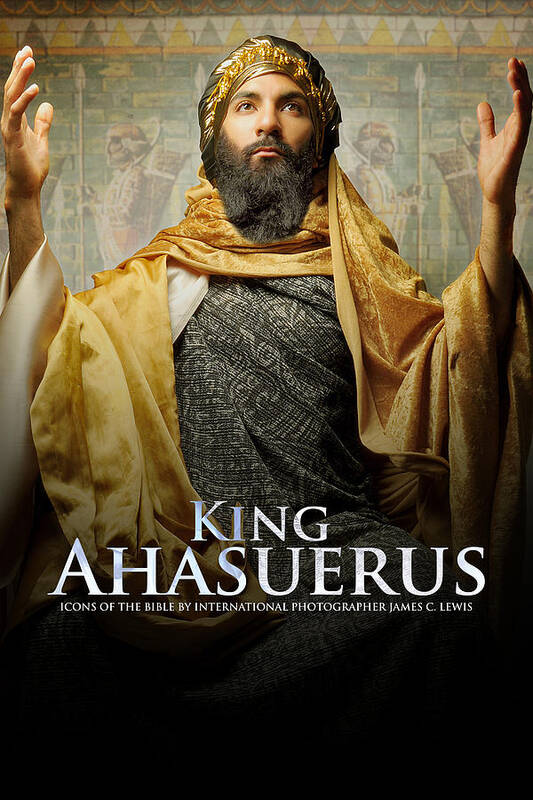
  Art Print featuring the photograph King Ahasuerus by Icons Of The Bible
 

by


Damien F. Mackey


‘Now I will give all your countries into the hands of my servant Nebuchadnezzar
king of Babylon; I will make even the wild animals subject to him. All nations
will serve him and his son and his grandson until the time for his land comes;
then many nations and great kings will subjugate him’.
 
Jeremiah 27:6-7


Daniel 5 provides us with a straightforward sequence of kings for the Chaldean to early Medo-Persian eras. These are: 1. Nebuchednezzar, 2. his son Belshazzar, and 3. Darius the Mede.
Thus the prophet Daniel proclaims to Belshazzar (5:18): ‘O thou king, the most high God gave Nebuchadnezzar thy father a kingdom, and majesty, and glory, and honour …’. And later we read (vv. 30-31): “In that night was Belshazzar the king of the Chaldeans slain. And Darius the Median took the kingdom, being about threescore and two years old”.
That King Nebuchednezzar ‘the Great’ indeed had a son named Belshazzar is further attested by Baruch 1:12: ‘The Lord will give us strength, and light to our eyes; we shall live under the protection of King Nebuchadnezzar of Babylon, and under the protection of his son Belshazzar, and we shall serve them many days and find favor in their sight’.
 
 
Nebuchednezzar and his evil son Belshazzar (Daniel 5) find a parallel in my revision with: Nabonidus and his (known) son Belshazzar.
According to this revision, Nebuchednezzar = Nabonidus, and Evil-merodach (known son and successor of Nebuchednezzar) = Belshazzar (of Baruch, of Daniel, and son of Nabonidus).
 
And so we have this clear sequence:
 
  1. Nebuchednezzar (= Nabonidus), his son
  2. Belshazzar (= Evil-merodach),
  3. Darius the Mede.
 
The enigmatic Darius the Mede I also consider to have been both Cyrus ‘the Great’ and the ‘King Ahasuerus’ of the Book of Esther.


But now a seeming complication arises. The prophet Jeremiah adds to Nebuchednezzar’s lineage a ‘grandson’: “All nations will serve him and his son and his grandson …”.
 
Was Darius (= Cyrus = ‘Ahasuerus’) actually a ‘grandson’ (בֶּן-בְּנוֹ) of Nebuchednezzar’s?
 
In a sense, yes he was, if Jewish tradition is right here. For the (presumably young) wife of the 60+ year old king ‘Ahasuerus’ is alleged to have been the daughter of Belshazzar.
“Vashti was born to Babylonian royalty. Her grandfather was Nebuchadnezzar, who had destroyed Solomon's Temple in Jerusalem and driven the Jews into exile. Her father was Belshazzar, the last in a line of great Babylonian kings whose dramatic death is described in the Book of Daniel”.
This we read in an article by Rebbetzin Tziporah Heller, entitled “The Villainy of Vashti” (2003): https://www.aish.com/h/pur/t/dt/48951881.html


As the story of Purim in the Book of Esther begins, King Achashverosh [Ahasuerus] of Persia is holding a banquet.
On the seventh day of the festivities, the king summons Queen Vashti so that the ministers and guests can admire her beauty. He commands that she come wearing only the royal crown. Queen Vashti refuses and is executed.
The job vacancy brings Esther to the palace where she is in position to save the Jewish people when chief minister Haman hatches his plot for their total annihilation.
Vashti, whose refusal to obey the king sets the action in motion, is an interesting character in this drama. In fact, in the first analysis she seems like a heroine -- a woman who had too much dignity to be paraded naked before a drunken horde. There is only one problem. Heroism is not determined from the outside in, but rather from the inside out. From that perspective, Vashti, as we shall see, was a villain.
Judaism defines heroism as an act of overcoming an obstacle that stands in the way of a spiritual objective. Such obstacles are placed before all of us by God, but the level of sacrifice demanded to overcome each such obstacle can vary widely. In the case of one person, genuine heroism may go as far as sacrificing one's life for the sake of another. For another person, genuine heroism may mean sacrificing ego or pride.
Therefore, our question when assessing Vashti's heroism or villainy is: what was she reaching towards and what stood in the way of her achieving that goal?
In order for us to draw conclusions, let us expand our picture of her.
 
WHO WAS VASHTI?
 
Vashti was born to Babylonian royalty. Her grandfather was Nebuchadnezzar, who had destroyed Solomon's Temple in Jerusalem and driven the Jews into exile. Her father was Belshazzar, the last in a line of great Babylonian kings whose dramatic death is described in the Book of Daniel.
Belshazzar threw a party and commanded that revelers drink from the holy vessels of the Temple and then praise "the gods of gold and silver..."
At that moment, a large unattached finger appeared and started to write on the wall: "God has numbered the days of your kingdom and brought it to an end ... your kingdom has been divided and given to the Medes and Persians." That very night invading [hordes] of Persians and Medes attacked; Vashti was the only survivor. But the spirit of conquest that had doomed her father lived on intact within her.
We learn more about her from the Talmud (in Megillah 12). It tells us Vashti would have Jewish women brought before her, force them to undress and coerce them into working for her on Shabbat. The Talmud then asks why did she refuse to come before Achashverosh (not being known as a modest woman)? The Talmud gives two answers: 1) because tzaraat (a skin ailment resembling leprosy) erupted on her body; or 2) because she had grown a tail.
If an aggadic statement in the Talmud doesn't make sense literally, the approach that we are meant to take, according to the Maharal, is to try to grasp the underlying meaning of the allegory. With this in mind we shall proceed, separating the literal from the allegorical and analyzing the latter further.
It is almost certain given the social environment of ancient Persia, and the underlying hatred of Jews that came to the surface soon after this episode, that the first part of the statement is literal. Yes, she did have Jewish women abducted. Yes, she did want to humiliate them. Yes, she was clever enough to figure out the most efficient way to bring this about.
The second segment is not literal. No, she did not sacrifice her life by disobeying a despot because of bad skin. She did not have a terrible case of acne or anything resembling a simple skin disease. No, she did not reverse evolution and grow a tail. The second part is an allegory that demands interpretation.
 
A THREAT TO VASHTI
 
Jewish women represented a threat to Vashti because they were, in the most profound sense of the word, unconquerable. By observing Shabbat, they demonstrated that there is a ruler who is beyond the reach of any monarch. By maintaining their basic modesty they proved that they define themselves internally rather than superficially. They were untouchable.
It was for that reason that Vashti felt an almost compulsive desire to break them. By doing so she sealed her own fate. In order to understand how, we can follow the allegory that the Talmud presents.
The body-soul link is stronger than many of us realize. While we all know that excitement can raise blood pressure, and some of us can describe the process with great precision, there is far more involved that we have as yet to explore. In earlier times, God Himself would allow physical manifestations of an individual's spiritual state to show. The best known of this phenomenon is tzaraat. It affected the skin, the most external part of the body.
(The skin hides and protects the inner organs. The word for skin in Hebrew is or. It is written identically to the word iver, which means blind. The common denominator of the two words is that they both convey the concept of not being able to see things as they really are.)
Tzaraat was an eruption similar to leprosy in that the skin became tough and insensitive. The difference is that while in leprosy the entire effected area is insensate; in the case of tzaraat there always remained at least a patch of living skin in the midst of the dead skin. What this symbolized was that there was always a possibility of redefining oneself.
The Talmud tells that tzaraat came about because of sins involving slander. Slander always has one motivation -- arrogance.
There is no cheaper high for self-importance addicts (like Vashti) than trivializing and belittling others. It gives such people the feeling of superiority without any need to actually be superior. Blindness helps to silence the conscience, because then the victim can't be seen as a fellow human. Therefore, to slander freely without guilt, it helps to have thick skin and to be spiritually blind.
Vashti had long ago stopped seeing beyond the surface. Her punishment was that she had to face the fact that she too was not flawless.
In the process of disparaging others, she lost something very precious -- her own humanity. What she saw when she looked in the mirror was a parody of a human being -- the tail. She saw a heartless egomaniac.
 
WHY VASHTI REFUSED THE KING
 
We can now return to our original question. Why didn't she come when Achashverosh called?
The Talmud (in Midrash Rabba) provides us with the final piece of information that lets us put the puzzle pieces together. It reveals to us the words that she used when she refused him. "You were my father's stable boy. You had harlots parade in front of you. Are you going back to where you came from?"
Her intent was not to build herself up or to preserve her integrity. She was aware of what she had become, but had neither the will nor the courage to change. She had followed a pattern that had typified her life from the beginning. Her intent was to cut him down. There was no heroism here. There was only arrogance.
It is easy for us to fool ourselves. Heroism and egotism come unlabeled. The only key that we have is truth. Purim is the holiday in which every thing was turned about. The inside, the core of truth was revealed. Falsehood was shaken off. May we be worthy of using this day to discover the part of ourselves that is genuinely heroic.
[End of quote]
 
Jewish legends can prove to be very helpful here and there, as I found, for example, in my search for the identity of the elusive Aman (Haman) of the Book of Esther:


Aman (Haman), a king of Judah no less, King Amon!
That was most unexpected.
 
And now, in the case of Jeremiah 27:7, we can say that (thanks again to Jewish tradition) the Medo-Persian king who followed Belshazzar could  indeed be described as a ‘grandson’ of Nebuchednezzar, a ‘grandson’ through marriage - he apparently having married Nebuchednezzar’s grand-daughter.