Monday, June 6, 2016

Iahdulim as Biblical Eliada

https://s-media-cache-ak0.pinimg.com/600x315/33/96/df/3396dfdff918f41ba97293438710f6bd.jpg
 
by
 
 Damien F. Mackey


“And God raised up against Solomon another adversary, Rezon son of Eliada,
who had fled from his master, Hadadezer king of Zobah”.
 
1 Kings 11:23 


As with Dr. Immanuel Velikovsky’s radical downwards revision of the el-Amarna age from the c. C14th BC to the Divided Kingdom period of Israel, in the c. C9th BC, the validity of Dean Hickman’s re-location of King Hammurabi from a conventionally precarious C18th BC all the way down to the C10th BC era of King Solomon is confirmed by some impressive bibico-historical synchronisms.
See e.g. my:


This revised presentation seems to fit better archaeologically as well, in my opinion, given e.g. S. Lloyd’s compelling comparisons between the art of the famous Mari palace and that of neo-Assyrian Khorsabad (The Archaeology of Mesopotamia, London, 1978). It makes more sense, therefore, to have Mari removed only a couple of centuries from neo-Assyria rather than a whole millennium.
We read similarly of a Mari-Khorsabad likeness at: http://www.louvre.fr/en/oeuvre-notices/mural-painting
 
The investiture of the king of Mari
 
The Investiture of Zimri-Lim is the only Near Eastern pictorial composition of the second millennium BC in the format of a framed panel rather than a frieze. …. The principal theme of the Investiture painting - a divinity, in this case Ishtar, offering the king the scepter and staff, the insignia of rule - is also represented on other monuments, such as the Code of Hammurabi (Sb 8).
On the two symmetrical side panels are subsidiary elements: the goddess Lama interceding, a palm, a composite tree, fabulous guardian animals. The symbolism (jets of water, plants, the gathering of dates) highlights the assurance of fertility the king in his palace is meant to provide. The warlike aspect of Ishtar with her lion - positioned exactly in the middle of the painting - is counterbalanced by the dove, an attribute of her pacific and loving aspect. The human-headed bull, the griffin, and the sphinx prefigure the colossal door-guardians of Neo-Assyrian palaces such as that at Khorsabad.
 
https://s-media-cache-ak0.pinimg.com/736x/3d/c2/5d/3dc25d20f047fa5a1eda89ffc82d4556.jpg
 
A potential pairing that Hickman did not pick up in his new context was the combination from the First Book of Kings of “Rezon” and his father “Eliada”, with the historical Zimri-Lim of Mari and his father, Iahdulim (Iahdunlim).
Taken on its own, a proposed identification of the not well known Iahdulim with the even lesser known Eliada, would not be worth much at all. But, in a context of multi-identifications, it has its value.  
 
-------------------------------------------------------------------------------
When we transfer all of these events onto a revised time plane,
there emerges a more precise picture.
-------------------------------------------------------------------------------
 
 
The biblical Eliada appears to be unknown apart from the above quote, “Rezon son of Eliada”.
About Iahdulim we know somewhat more. Previously I have written about him:
 
Era of Solomon
 
Peace, which had been unknown in the time of Saul and David, came to Israel during the glorious reign of Solomon, David's son and successor. David had smashed the mighty forces of Hadadezer king of Zobah, and had put garrisons in Aram and Damascus; and the Syrians became servants to David and brought tribute (II Samuel 8:5-6). For more than 20 years Solomon reigned in peace and prosperity, with Israel's enemies subdued on every side. It appears that Solomon absorbed both the kingdoms of Hadadezer and of the Aleppo region, because he took Hamath-zobah (II Chronicles 8:3). He built Tadmor in the wilderness - which was connected by a desert road to Mari [400] - and he also built store cities in Hamath (8:4).
 
https://upload.wikimedia.org/wikipedia/commons/b/b4/Third_Mari.png
 
Even after his 20th year of rule (II Chronicles 8:1), things were still going well for Solomon; for Scripture recalls the celebrated visit of Queen Sheba. Solomon had an incredible 1400 chariots, and 12,000 horsemen with which to defend Jerusalem (I Kings 10:26). But the happy situation was not to last. In the latter half of his long reign Solomon apostatised from Yahweh worship by courting the foreign gods of his wives (I Kings 11:4). Scripture names three adversaries who "lifted up their hand" against Solomon in those days (I Kings 11): Hadad, the Edomite; Rezin, son of Eliada, who had fled from his master Hadadezer king of Zobah and Jeroboam, an Ephraïmite. It is this Rezin upon whom our attention will be focussed for the remaining pages.
 
 
From Rezin to Hammurabi
 
In identifying Rezin with Zimri-Lim, and his father, Eliada with Iahdulim, we are able to refine Hickman's chronological scheme somewhat. Hickman had surmised that Zimri-Lim belonged to the time of David, which meant that Iahdulim was roughly contemporaneous with Saul: "Since ... Iahdulim ... mentions only the Benjamites [in the date-formula quoted earlier] he must belong to Saul's time" [410]. Hickman thought that there was reason to suspect "That the incursion of this [Iahdulim] into Benjamite territory resulted in Saul's wars against Zobah and that Mari was associated with the Zobah kingdom" [420]. It seems that Hickman was correct in his last statement in that Iagit-Lim of Mari, who was Zimri-Lim's grandfather, had once been an ally of Shamsi-Adad. But Iagit-Lim and Shamsi-Adad quarrelled eventually, with dire consequences. Iagit-Lim's son and successor, Iahdulim - who claimed to have strengthened the foundations of Mari - was assassinated by his own servants. Shamsi-Adad then occupied the city of Mari, and set up his son, Iasmakh-Adad, as ruler. Zimri-Lim, the heir to the throne, was forced to flee for his life, spending many years in exile at Aleppo [430]. Zimri-Lim returned to Mari about the 16th year of Hammurabi of Babylon, and ruled there for at least most of Hammurabi's remaining years [440]. Since Shamsi-Adad's death coincided with the 12th year of Hammurabi [450], Zimri-Lim apparently was returning to a less hostile environment, where he ruled for at least 17 years [460]. For most of that time he and Hammurabi were on quite friendly terms with one another; but Hammurabi eventually turned against Zimri-Lim and, in his 33rd year, he came to Mari and dismantled its walls [470]. But this may not have been the end of Zimri-Lim because the number of years-names attested for his reign would indicate that he continued to rule Mari for some years after this event. [480] When we transfer all of these events onto a revised time plane, there emerges a more precise picture. Hadadezer (Shamsi-Adad), a one-time ally of Rezin's (Zimri-Lim's) grandfather, king of Mari, quarrelled with the king of Mari. Later, Eliada (Iahdulim), Rezin's father, was assassinated by his servants - presumably at the instigation of Hadadezer - and Hadadezer's son Shobach (Iasmakh-Adad) was established as ruler of Mari. The assassination of his father, and the occupation of the city throne to which he was heir, explains why Rezin "fled from his master Hadadezer king of Zobah" (I Kings 11:23). We also now know the city to which Rezin fled, Aleppo, or Halab, in Hamath (Yamkhad). Scripture goes on to record that "after the slaughter of David" (i.e. after David had slaughtered Hadadezer's forces), Rezin "gathered men about him and became leader of a marauding band" (I Kings 11:24). Some of his band may have been remnants of Hadadezer's decimated forces.
[End of quote]
 
Biblical archaeology ought to be able to benefit exponentially from this corrected placement of the famous Mari civilisation, with its renowned palace, in the age of King Solomon.
 
Is it too much to expect that the fabulous Solomon, who entertained and formed alliances with all the kings of the world, would not have influenced enormously, too, this Mari civilisation and its palace - from which we may now expect to gain insights, in turn, into the currently obscure archaeology of King Solomon?

Ilu-Kabkabu as Biblical Rehob


by
 Damien F. Mackey
 
  
“Moreover, David defeated Hadadezer son of Rehob, king of Zobah,
when he went to restore his monument at the Euphrates River”.
 2 Samuel 8:3  
 
 
As with Dr. Immanuel Velikovsky’s radical downwards revision of the el-Amarna age from the c. C14th BC to the Divided Kingdom period of Israel, in the c. C9th BC, the validity of Dean Hickman’s re-location of King Hammurabi from a conventionally precarious C18th BC all the way down to the C10th BC era of King Solomon is confirmed by some impressive bibico-historical synchronisms. See e.g. my:
An excellent pairing that Hickman picked up in his new context was the combination from the Second Book of Samuel of “Hadadezer” and his father “Rehob” (or Rekhob), with the historical Shamsi-Adad 1 and his father, Ilu-kabkabu (or Ila-kabkabu).
Taken on its own, Hickman’s proposed identification of the poorly known Ilu-kabkabu with the even lesser known Rehob, would not be worth much at all. But, in a context of multi-identifications, it has its value.
The biblical Rehob appears to be unknown apart from the above quote, “Hadadezer son of Rehob, king of Zobah”.
About Ilu-kabkabu we know this little bit more (http://thesaurus.babylon-software.com/Ila-Kabkabu#!!TMEVPV7M3X):
  • Ila-kabkabu is … mentioned as the father of another Assyrian king, Shamshi-Adad I. However, Shamshi-Adad I did not inherit the Assyrian throne from his father but was an Amorite conqueror. His father, Ila-kabkabu, was king not of Assyria, but of Terqa in Syria, and ruled in the time of Iagitlim of Mari. According to the Mari Eponyms Chronicle, Ila-kabkabu seized Shuprum in a certain year (possibly 18th century BC) [sic], and Shamshi-Adad “entered his father’s house”, i.e. succeeded him as king of Terqa, in the following year.:163Shamshi-Adad subsequently conquered a wide territory and became king of Assyria, where he founded a dynasty.
    [End of quote]
Regarding Hickman’s connection here, I wrote in my university thesis
A Revised History of the Era of King Hezekiah of Judah
and its Background
(Volume One, p. 46):
Courville’s re-location of Hammurabi to the approximate time of Joshua and the Conquest is still fairly “liquid” chronologically, as it seems to me, without his having been able to establish any plausible syncretisms beyond those already known for Hammurabi (e.g. with Shamsi-Adad I and Zimri-Lim). Revisionist Hickman on the other hand, despite his radical lowering of the Hammurabic era even beyond the standard [Velikovsky’s timescale], by about seven centuries to the time of kings David and Solomon (c. C10th
BC), has been able to propose and develop what are to my way of thinking some promising syncretisms, e.g. between David’s Syrian foe, Hadadezer, and Shamsi-Adad I (c. 1809-1776 BC, conventional dates), with the latter’s father Ilu-kabkabu being the biblical Rekhob, father of Hadadezer (2 Samuel 8:3);127 and between Iarim-Lim and the
biblical Joram (var. Hadoram), son of To’i, and prince of Hamath (cf. 2 Samuel 8:10 & 1
Chronicles 18:10).
‘The Dating of Hammurabi’. 127 Ibid. In n. 21, Hickman explains how Ilu-kabkabu can also be rendered in Sumerian as Uru-kabkabu (Rekhob).


Thursday, June 2, 2016

Paradise (Jerusalem) Centre of the World


by
 Damien F Mackey
 
 
“Thus says the Lord GOD:
‘This is Jerusalem. I have set her in the centre of the nations, with countries all around her’.”
Ezekiel 5:5
 
 
The most common geographical expression used in the first 4 chapters of Genesis (so devoid of specific geographical indicators) is that general word/phrase, “[the] east”.
Thus the Lord plants “a garden in Eden, in the east” (2:8). And “…east of the garden He placed the cherubim” (3:24). And Cain “settled in the land of Nod, east of Eden” (4:16). (This eastern orientation is taken up again in Ezekiel 47:8).
  1. Albright, though, contended most interestingly that Hebrew miqeddem means “in primeval times” and not “from or in the east” (W. Albright 1968:97, as cited by Dr. Livingston). That would certainly make the more sense for me, at least in regard to the usage of this phrase in Genesis 2:8; for it would remove a geographical complication (by actually taking the geography right out of it) that I had encountered in “The Location of Paradise”, when trying to situate the Garden “in Eden, in the east” (instead of, perhaps, “in Eden, in primeval times”).
Presumably the Garden of Eden still remained the primary point of reference or orientation for exiled man and woman: their prototypal holy place. Just as Jerusalem would later be for the Israelites/Jews even during their various exiles (Assyria, Babylon). Based on the testimony of Jesus as I have interpreted it, what became the site of Jerusalem was the very site where Abel the Priest was slain by his envious brother, Cain, when the former was bringing his acceptable offering unto the holy mountain (Genesis 4:4-8). Wherever Adam and Eve may have dwelt subsequent to the Fall, the Garden of Eden presumably continued to be the ‘altar’ to where Adam seasonally would bring his offerings. Perhaps pious tradition can fill in at least one gap by telling us that Adam (his head, at least) was buried at this sacred site (Jerusalem). Thus R. Graves (The Greek Myths, 146:2): “… according to Ambrose (Epistle vii. 2), Adam’s head was buried at Golgotha, to protect Jerusalem from the north”.
This may, in fact, be the very origin of the name of that place:

So they took Jesus; and carrying the Cross by himself, he went out to what is called The Place of the Skull, which in Hebrew is called Golgotha. There they crucified him … (John 19:17, 18).

The Divine plan of salvation has this perfect symmetry about it:
the New Adam redeemed humankind, died, was buried and rose, precisely where the Old Adam had caused humankind’s Fall, and was ultimately buried.

Wednesday, May 11, 2016

When Bible Written: Scholars Ever So Slowly Waking Up

New Evidence Suggests Bible Written Earlier than Many Scholars Believed

New Evidence Suggests Bible Written Earlier than Many Scholars Believed
And Moses wrote down all the words of the LORD. – Exodus 24:4 (ESV)


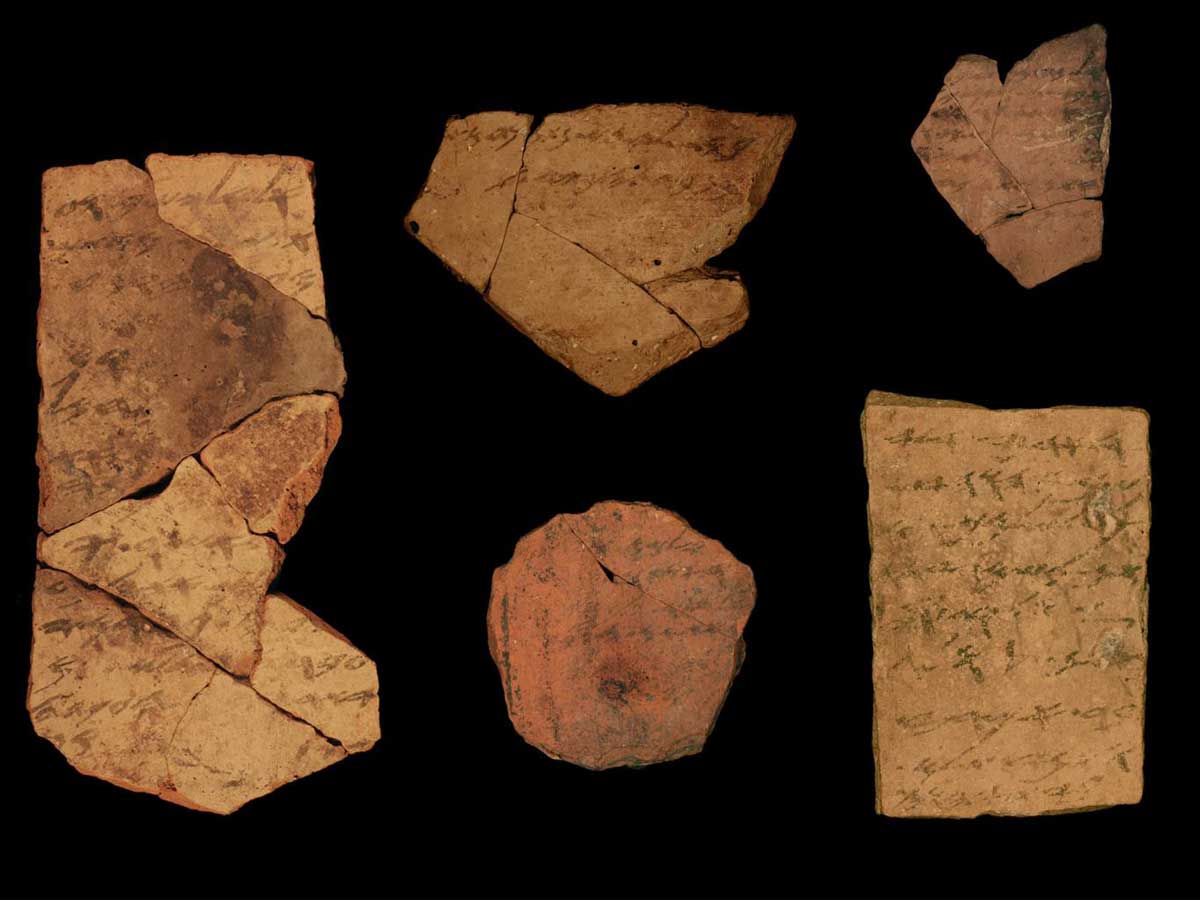
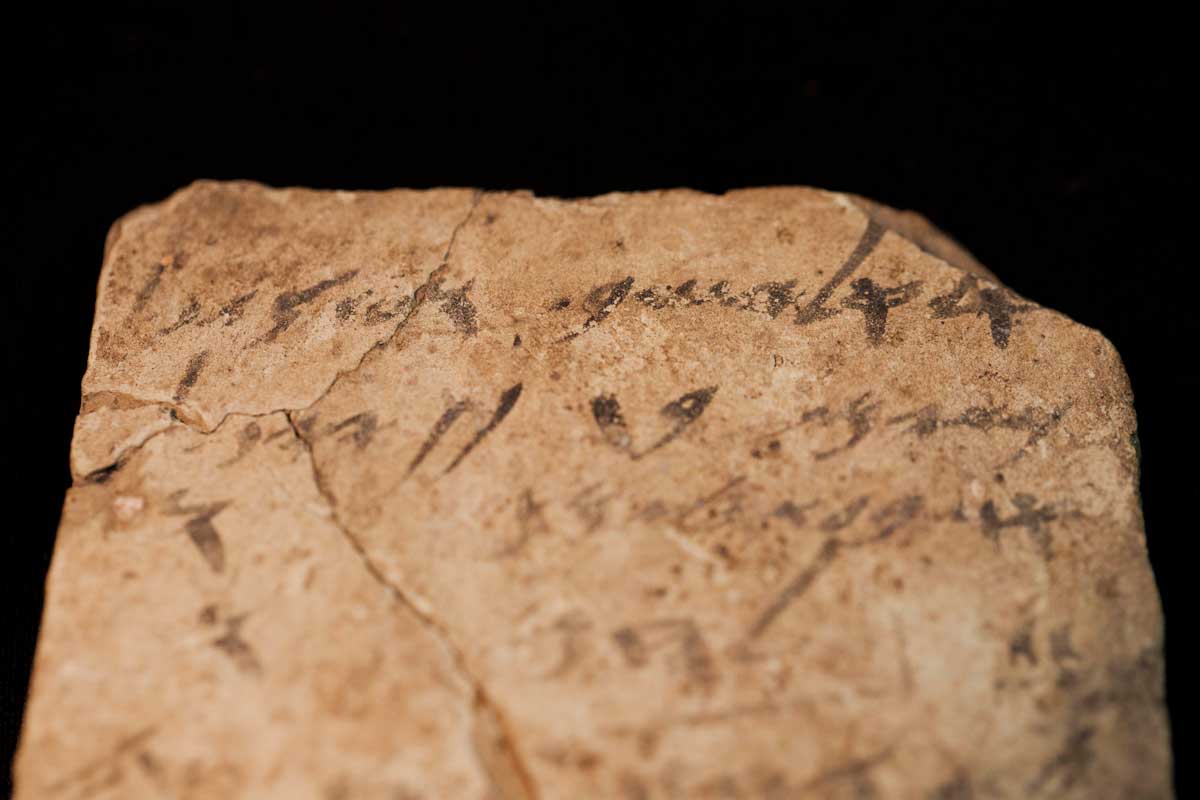
When were the first books of the Bible written? That is a question that has been debated in academia for centuries. Israeli scholars are now surprised by the evidence from a collection of pottery fragments found in the remains of the ancient fort of Arad, Israel, near the Dead Sea. Their analysis suggests that the first books of the Bible’s Old Testament may have been composed earlier than many scholars believe. The researchers from Israel’s Tel Aviv University posted their findings Monday in the Proceedings of the National Academy of Sciences. The study’s authors say that the writings of soldiers on pottery shards from around 600 BC reveal that literacy in Judah was widespread at the time and not restricted to a few of society’s elites as many historians had thought. The routine messages include things like lists of provisions and information on troop movements. Many were addressed to the fort’s quartermaster named Eliashiv.


“We’re dealing with really low-level soldiers in a remote place who can write, so there must have been some sort of educational system in Judah at that time … And they wrote well, with hardly any mistakes,” archaeologist and co-author of the study, Israel Finkelstein told The Christian Post.

And these words that I command you today shall be on your heart. You shall teach them diligently to your children, …You shall write them on the doorposts of your house and on your gates. – Deuteronomy 6:6,9 (ESV)

These findings match the numerous accounts in the Bible, which indicate that writing was used regularly by the people of Israel.  Professor Finkelstein was featured in Patterns of Evidence: The Exodus, which highlighted his views that the Exodus did not happen as described in the Bible. However, he breaks with many scholars who hold that the earliest books of  the Hebrew Bible were not composed until after the Babylonian captivity, which began in 586 BC when the First Temple in Jerusalem was destroyed. The period favored by many scholars is from about 500-200 BC. In contrast, Finkelstein thinks that clues in the biblical text point to its authorship in the late 7th century (600s) BC.
   

Messages inscribed with ink on pottery fragments have given new insights into questions about when the Bible may have been written. (Photo: Michael Cordonsky, Israel Antiquities Authority)

According to Finkelstein, a high level of literacy in the period just before Nebuchadnezzar’s destruction of Jerusalem shows that they had the intellectual resources to construct much of the Old Testament by this time, therefore this new study offers support for his theory.

“It’s the first time we have something empirical in our hands,” said Finkelstein. “Following the fall of Judah, there was a large gap in production of Hebrew inscriptions until the second century BCE, the next period with evidence for widespread literacy. This reduces the odds for a compilation of substantial biblical literature in Jerusalem between ca. 586 and 200 BCE.” [the time favored by many historians]
   

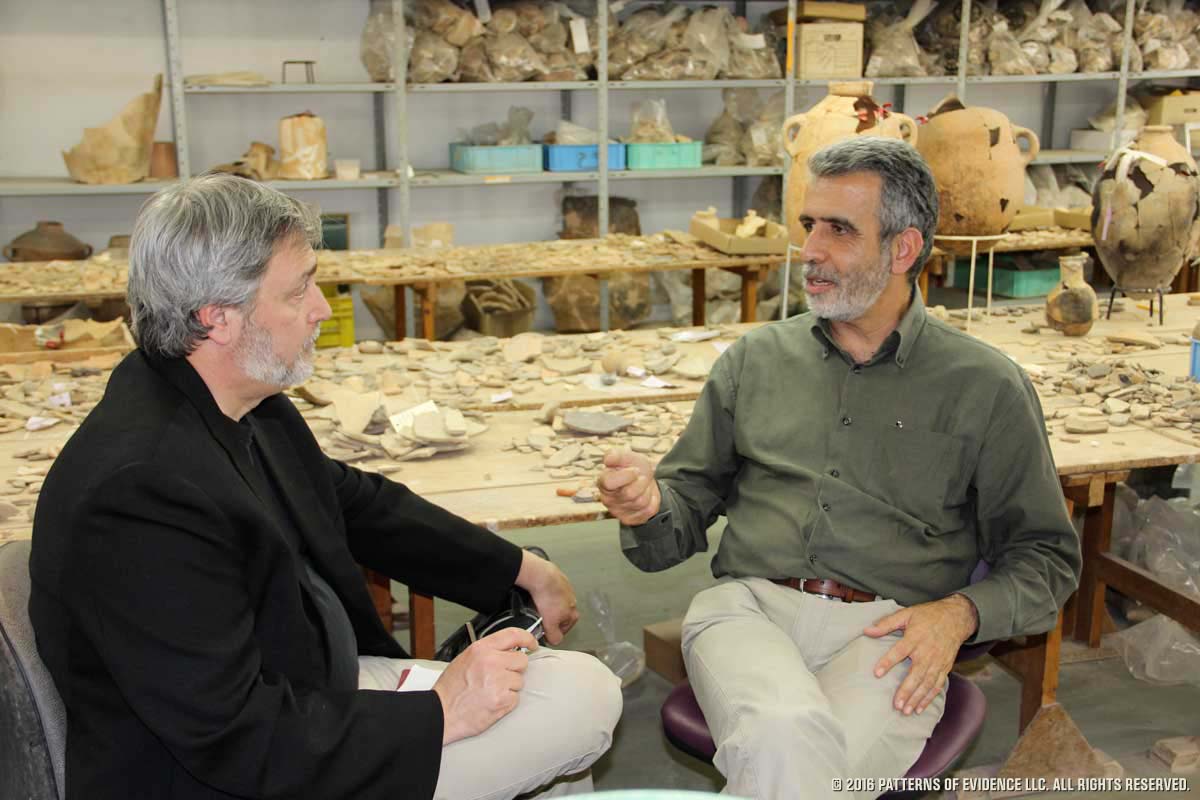
Filmmaker Timothy Mahoney interviewing Israel Finkelstein at Tel Aviv University for the film Patterns of Evidence: The Exodus. (Photo: Patterns of Evidence, LLC.)
    

Finkelstein’s views about how, when and why the Bible came into being can be further explored in the book Patterns of Evidence: The Exodus; A Filmmaker’s Journey.

The team of 9 scholars who conducted the study included mathematicians, archaeologists and a physicist. They carefully digitized images from the best samples among a group of over 100 shards that were originally excavated in the 1960s. Using sophisticated methods for image processing, document analysis and machine learning algorithms, the group was able to distinguish the unique styles of at least six different authors within the examined inscriptions. This helps overturn the majority view that only a tiny number of elites could write at this time. The idea that Judah had only a handful of writers has caused many to doubt that a work as sophisticated as the Bible could have been largely written before the fall of Judah, as the Bible claims.
   

So the men arose and went, and Joshua charged those who went to write the description of the land, saying, “Go up and down in the land and write a description and return to me. And I will cast lots for you here before the LORD in Shiloh.” – Joshua 18:8 (ESV)
Gideon son of Joash returned from the battle by the Ascent of Heres. He captured a youth from the men of Succoth and interrogated him. The youth wrote down for him the names of the 77 princes and elders of Succoth. – Judges 8:13-14 (HCSB)
The remnant of the trees of his forest will be so few that a child can write them down. – Isaiah 10:19 (ESV)


Letters found at the fort of Arad, Israel, and dated to around 600 BC show the unique styles of at least six different authors. (AP Photo/Dan Balilty)
     

These finds also add one more piece to the puzzle in the debate over whether it is even possible for Moses to have been one of the writers as the Bible itself claims. The traditional view that Moses was the author of the Torah (the first five books of the Bible) began to be increasingly challenged in the 17th and 18th centuries. But it was not until the 1800s that a branch of criticism known as higher criticism (centered in Germany) developed specific methods to examine the text in an effort to reconstruct its historical origins. In 1877 Julius Wellhausen published his system explaining the construction and development of the Torah (and the book of Joshua) and by 1900 his ideas had become mainstream.
Known as the Documentary Hypothesis (or the JEPD Theory), Wellhausen’s view proposed that there were four distinct authors of the Torah (not one, as in Moses). These four authors  wrote over a period of several hundred years with the first writing occurring about 950 BC (some 500 years after Moses). Wellhausen used what he thought were clues in the text like style, the use of divine names, and appearance of literary patterns to distinguish the various authors. He believed the works of these authors were later compiled and formed into the finished version of the Torah resembling something like what we have today.  Liberal religious scholars, such as the famous theologian Rudolf Bultmann, have used higher criticism of the Bible to “demythologize” it.


Then Moses wrote this law and gave it to the priests, the sons of Levi, who carried the ark of the covenant of the LORD, and to all the elders of Israel. – Deuteronomy 31:9 (ESV)
just as Moses the servant of the LORD had commanded the people of Israel, as it is written in the Book of the Law of Moses, “an altar of uncut stones, upon which no man has wielded an iron tool.”  – Joshua 8:31 (ESV)


Rabbi Manis Friedman reading from the Torah in Patterns of Evidence: The Exodus. Did the original composition of the Torah take place at the time of Moses (c. 1400 BC), near the end of Judah’s kingdom (c. 630 BC), or after the exile (c. 500-200 BC)? (Photo: Patterns of Evidence, LLC.)


Wellhausen’s theory went through many modifications during the 20th century but, by and large, some form of the idea of late/multiple authorship for the Torah is assumed almost universally in the religion, anthropology and humanities departments of today’s universities. Over time, the lack of evidence for literacy in Israel and Judah has influenced many scholars to push their date for initial authorship of the Torah later and later – into the period 400-200 BC. With this new study, we may be witnessing the pendulum of scholarly opinion beginning to swing back in the other direction. This will be one of the many issues to look for in the continuing investigations of filmmaker Timothy Mahoney.

Then the LORD said to Moses, “Write this as a memorial in a book and recite it in the ears of Joshua… – Exodus 17:14 (ESV)


....


Taken from: http://patternsofevidence.com/blog/2016/04/15/new-evidence-suggests-bible-written-earlier-than-many-scholars-believed/