Wednesday, March 11, 2020

Omri and Tibni

But Omri's followers proved stronger than those of Tibni son of Ginath. So Tibni died and Omri became king. -1 Kings 16:22


by
 

Damien F. Mackey


“‘I will return the cities my father took from your father’, Ben-Hadad offered.

‘You may set up your own market areas in Damascus, as my father did in Samaria’.”
 

I Kings 20:34


Ben-Hadad I of Syria has, in this treaty statement of his to the victorious King Ahab of Israel, provided us with some chronological details of the utmost importance towards a revision of the earliest period of the Divided Monarchy.


What the King of Syria is basically saying here to Ahab is that:


Ben-Hadad’s own father, who we know from I Kings 15:18 to have been Tab-rimmon – {“Asa then took all the silver and gold that was left in the treasuries of the Lord’s temple and of his own palace. He entrusted it to his officials and sent them to Ben-Hadad son of Tabrimmon, the son of Hezion, the king of Aram, who was ruling in Damascus”} – had taken cities from Ahab’s father, who we know to have been Omri, the founder of Samaria, and had even set up his market in Omri’s capital city of Samaria.


No doubt the cunning Ben-Hadad I well knew his recent Syro-Israelite history.

His statement, however, must create a massive chronological headache (or so I should think) for the conventional biblico-historians.

Why?

Well Tab-rimmon, as we learn from I Kings 15:19, had not only reigned contemporaneously with Abijah, king of Judah (a contemporary and foe of Jeroboam I (I Kings 15:6)), but had actually signed a treaty with the same Abijah (15:19). No doubt their alliance would go a long way towards accounting for the fact that Abiijah of Judah was able to defeat the mighty Jeroboam of Israel in battle (2 Chronicles 16:13-19), so emphatically, in fact, that (v. 20): “... Jeroboam of Israel never regained his power during Abijah’s lifetime ...”. 

Putting all of this together, it must necessitate that Jeroboam and Omri, contemporaneous with Tab-rimmon, were one and the same king. For there is nothing whatsoever to indicate that Israel had two kings ruling at the same time – and this would have been impossible, anyway, given the might of Jeroboam, of Omri.

Admittedly the given reign lengths are substantially different:


I Kings 14:20: “[Jeroboam] reigned for twenty-two years and then rested with his ancestors”.


I Kings 16:23: “In the thirty-first year of Asa king of Judah, Omri became king of Israel, and he reigned twelve years, six of them in Tirzah”.


But geographical factors also need to be taken into account.

Jeroboam appears to have begun at Shechem, but may later have moved to Peniel (or Penuel) (I Kings 12:25), and to Tirzah (14:17).

Tirzah would make perfect sense in my context, because that is from where Omri ruled for six years of his reign. Then Omri built Samaria as his capital (16:24): “[Omri] bought the hill of Samaria from Shemer for two talents of silver and built a city on the hill, calling it Samaria, after Shemer, the name of the former owner of the hill”.

So while the longer reign length attributed to Jeroboam I could pertain to his total reign, the shorter one attributed to Omri would perhaps refer only to his time in Tirzah, and Samaria.


The reign of Tab-rimmon would have coincided with the early reign of Asa, who, I have argued elsewhere, was actually the same person as Abijah (traditionally thought to have been Asa’s father). The Syrian king would not have fought with Asa. The latter’s reign had begun with a decade of peace (2 Chronicles 14:1): “…. In his days the land had rest for ten years”. But that situation would have ensued only after Asa (as Abijah) had smashed Jeroboam I in battle.

Then, after this era of peace, Asa, who had become a foe of Tab-rimmon’s son, Ben-Hadad I, found himself having to form a hasty treaty with the latter in the face of king Baasha of Israel’s belligerence against Judah (I Kings 15:16-18).  


Now that we have determined that Omri must have been in serious conflict with the Syrian king, Tab-rimmon, then it becomes quite clear who was the enigmatic Tibni, foe of Omri (16:21-22):


Then the people of Israel were split into two factions; half supported Tibni son of Ginath for king, and the other half supported Omri. But Omri’s followers proved stronger than those of Tibni son of Ginath. So Tibni died and Omri became king.


Tibni could only have been Tab-rimmon, who, for a while, had had the better of the king of Israel.


As I noted above, Ben-Hadad I’s statement to Ahab “must create a massive chronological headache ... for the conventional biblico-historians”.

Or at least it ought to.

But, as so often happens, the standard chronology must universally be defended, even if it means stripping the biblical text of its essential meaning. And so we read, for example, at: https://www.biblestudytools.com/commentaries/gills-exposition-of-the-bible/1-kings-20-34.html


And thou shall make streets for thee in Damascus, as my father made in Samaria;
which confirms it that it is Ahab, and not Benhadad, that is speaking; for Benhadad's father never had any power nor residence in Samaria, whereas Omri, the father of Ahab, had, he built it, and made it his royal seat; and, in like manner, Ahab promises Benhadad that he should have his palace at Damascus, the metropolis of Syria, and exercise power there, and over all Syria; whereby Ahab renounced all right he had to the kingdom, and any of the cities of it ....


That is not the way that I read the text.

Nor is it the way that D. D. Luckenbill was reading it back in 1911, when in his article “Benhadad and Hadadezer” (The American Journal of Semitic Languages and Literatures, Vol. 27, No. 3, p. 275), he wrote: “... but because of "Ahab's unseasonable lenity” [Ben-Hadad] was released on condition that he restore the cities his father had taken from Ahab's father (Omri), and that the Israelites be allowed to "make streets," that is, have bazaars in Damascus”.

 Vol. 27, No. 3 (Apr., 1911), pp. 267-284 (18 pages)Benhadad and HadadezerD. D. Luckenbill 
I have - following T. Ishida - concluded that the House of Jeroboam I – hence of (my) Omri) – was an entity separate from the House of Ahab (my Baasha), even though Ahab is usually designated as a son of Omri. This relationship may thus have been through marriage.

T. Ishida has more to say on such dynastic matters, according to:


Tomoo Ishida instead suggested that the narrative of dynastic instability in the Kingdom of Israel suggests an underlying rivalry between tribes for its throne.[1] In the biblical narrative, the House of Jeroboam was from the Tribe of Ephraim, while the House of Baasha was from the Tribe of Issachar.[1] The Omrides are connected in this narrative with the city of Jezreel, where they maintained a second palace. According to the Book of Joshua, Jezreel was controlled by the Tribe of Issachar. Ishida views the narrative as suggesting that the Omrides themselves were members of the Tribe of Issachar.[1]

The assassinated king Elah and Omri thus shared a "common tribal origin", and were possibly kinsmen. Omri and the Tribe of Issachar's opposition to Zimri indicates that Zimri was not a member of their tribe.[1]

Ishida views both Zimri and his successor Tibni as likely members of the Tribe of Ephraim, its candidates in an attempt to reclaim the throne.[1]

But he also suggests another hypothesis, that Tibni originated from the city of Gina (also known as Beth-haggan) mentioned in the Amarna letters (14th century BC). In the Biblical narrative, this city was under the control of the Tribe of Manasseh. So Tibni could instead be the Tribe of Manasseh's candidate for the throne.[1]

Similarly, genealogist David Hughes speculated that Zimri and Tibni were members of the Tribe of Ephraim, and siblings to each other.[2] He further speculated that they were descendants of Hoshea, son of Azaziah, one of the rulers of the Tribe of Ephraim.[2] Hoshea and Azaziah are characters briefly mentioned in the Books of Chronicles (I Chronicles 27:20), where Hoshea is a contemporary of David:

 
...of the children of Ephraim, Hoshea the son of Azaziah
 

Finally, Tibni is referred to as “son of Ginath”, which seems further to complicate my identification. For Tab-rimmon’s father was (as we read in Ben-Hadad I’s statement to Ahab), one “Hezion”.

According to A. Hylton in “Solomon's Satans for criticism”:


Solomon’s foe, Hadad - the Hadar (or Hadad) of Genesis 36:39 - had “allied himself with Rezon of Damascus and established himself in the region of Aram”:


Not many people have been unfortunate enough to be given the title satan. Jobab was given that title by Abraham Abulafia, but unfortunately for Hadad the Edomite and Rezion the son of Eliada they were given the title satan by the Scriptures themselves. In this paper we will reflect on Hadad the Edomite. We think that the author of Kings understood that Hadad the Edomite of 1 Kings 11:14-25 was the same person as Hadar (d) the King who succeeded Baalhanan son of Achbor (David) as king in Edom who in turn succeeded Saul of Rehovoth (Saul) (Gen 36:37-39) and the ancestor to Ben Hadad I (1 Kgs 15:18-20). We will argue that he was a vassal of Pharaoh King of Egypt and that having returned from exile failed to gain enough support in Edom to revolt against Solomon so he moved north to Aram and aligned himself with Rezon of Damascus and established himself in the region of Aram. After he worked with Rezon ruler of Damascus against Solomon he left behind a line of kings called Ben Hadad. Hadad was not his only name we will suggest it was with Hadad Hezion or Hadad Tab-rimmon (1 Kings 15:18-21). ….

 
My tentative explanation for this would be that “Ginath” was an Egyptian name, given to the son of Hadad, as “Genubath” in Egypt. I tentatively conclude that Ginath was Genubath.

Previously I wrote on this:


As for “Genubath”, the son of Hadad, Velikovsky had rather strikingly identified his name amongst those giving tribute to Thutmose III, very soon after the latter’s First Campaign. Velikovsky wrote about it (in ch. iv) in “Genubath, King of Edom” (pp. 179-180):


Hadad had returned to Edom in the days of Solomon, after the death of Joab [I Kings 11:21-22]. Since then about forty years had elapsed. Genubath, his son, was now the vassal king of Edom …. Tribute from this land, too, must have been sent to the Egyptian crown; there was no need to send an expedition to subdue Edom.

When Thutmose III returned from one of his inspection visits to Palestine he found in Egypt tribute brought by couriers from the land, “Genubatye”, which did not have to be conquered by an expeditionary force.

 
When his majesty arrived in Egypt the messengers of the Genubatye came bearing their tribute.3 [3. Breasted: Records, Vol. II, Sec. 474].
 

It consisted of myrrh, “negroes for attendants”, bulls, calves, besides vessels laden with ivory, ebony, and skins of panther.

Who were the people of Genubatye? Hardly a guess has been made with regard to this peculiar name. The people of Genubatye were the people of Genubath, their king, contemporary of Rehoboam. .... 


Monday, March 9, 2020

King Hiram rubbishes Solomon’s meagre gift


by

Damien F. Mackey


“‘What kind of towns are these you have given me, my brother?’ he asked.

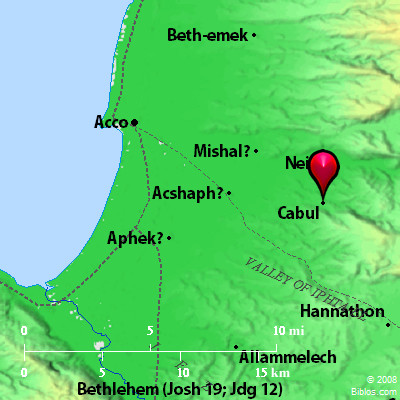
And he called them the Land of Kabul, a name they have to this day”.


I Kings 9:13


King Hiram, the merchant king, generally drove a hard bargain, as exemplified for example by his threat to the prince of Dêr in Babylonia. On this, see my article:

King Hiram the Historical and Hiram Abiff the Hysterical

https://www.academia.edu/30567350/King_Hiram_the_Historical_and_Hiram_Abiff_the_Hysterical

And he showed his utter disgust to his “brother”, Solomon, whose “twenty towns in Galilee” Hiram considered to be quite unworthy of his own generosity (I Kings 9:11-12):

King Solomon gave twenty towns in Galilee to Hiram king of Tyre, because Hiram had supplied him with all the cedar and juniper and gold he wanted. But when Hiram went from Tyre to see the towns that Solomon had given him, he was not pleased with them.


Cyrus Gordon, who provided us with the key to the riddle of Samson in his intriguing book, Riddles in History, (New York: Crown Publishers. 1974), will, in that same book, explain what King Hiram was on about when he contemptuously called Solomon’s Galilean cities, Kabul.

KBWL, as Gordon explains, is here to be understood (read) as an atbash:

http://www.bible-codes.org/atbash_bible_code_river.htm

“An Atbash code occurs when the first letter of the alphabet is substituted for the last and the second for the second to last …”.


What Hiram was really saying about those twenty towns in Galilee was that they constituted (with Kabul atbash-ed), a LŠPK, meaning, a “Rubbish Heap”. 


Tuesday, March 3, 2020

Maacah mother of Abijah, Asa


Image result for queen jezebel 


by


Damien F. Mackey


Commentators naturally have difficulty with the queen mother, Maacah, who is said to have been the mother of, supposedly, two successive kings of Judah, Abijah (Abijam) and his son, the long-reigning Asa.


I Kings 15:1, 2: “Abijah became king of Judah…. His mother’s name was Maacah [Maakah] daughter of Abishalom”.


I Kings 15:9, 10: “Asa began to reign over Judah ….  His mother’s name was Maacah daughter of Abishalom”.

Some go so far as to translate ‘his mother’ (אִמּוֹ) as ‘his grandmother’ – although the Hebrew word here invariably means “mother”. See e.g.: https://biblehub.com/hebrew/immo_517.htm


2 Chronicles provides the same information, but adds the variation that Maacah was the daughter of one “Uriel”.


2 Chronicles 13:1, 2: “Abijah became king of Judah …. His mother’s name was Maakah, a daughter of Uriel of Gibeah”.


Concerning Asa and Maacah in 2 Chronicles we are told that (15:16): “King Asa also deposed his mother Maakah from her position as queen mother, because she had made a repulsive image for the worship of Asherah. Asa cut it down, broke it up and burned it in the Kidron Valley”.

Again, “mother” (אֵם) here is sometimes replaced by “grandmother”.


Attempted explanations


Rhonda Burnette-Bletsch has, in her article,”Maacah”, offered her own possible solutions to the problem: https://jwa.org/encyclopedia/article/maacah-bible


The regnal formula of Asa, king of Judah from 908 to 867 b.c.e., claims that his mother is Maacah the daughter of Abishalom (1 Kgs 15:10). This is problematic because the same woman is alleged to be the mother of Asa’s father, Abijah/Abijam (1 Kgs 15:2). An alternative tradition, calling Abijah’s mother Micaiah the daughter of Uriel of Gibeah, is most likely an attempted harmonization of this difficulty (2 Chr 13:2). Either Abijah and Asa are brothers, not father and son, or Maacah was Asa’s grandmother, not his mother. Thus, Maacah is the wife of Rehoboam (2 Chr 11:20–23), whose favored status with her husband ensured Abijah’s succession. This tradition also offers the variant spelling “Absalom” for Maacah’s father. If this refers to the half-Geshurite son of David, Maacah and Rehoboam’s marriage would be politically advantageous. After serving as queen mother during Abijah’s short reign, Maacah continues in that position under her son or grandson, Asa. If Asa is her grandson, this atypical retention of Maacah’s title adds support to the contention that the queen mother was an official functionary in the Judean court and not simply the female parent of the king. Maacah’s role appears most clearly to be an office when Asa removes her from her position as gebirah (“great lady”) after she makes a cult object associated with the goddess Asherah. Ackerman suggests that the primary and generally accepted responsibility of the queen mother’s office was to devote herself to the cultic worship of Asherah. Thus, the lack of biblical evidence for this office might be partly explained by the Bible’s reluctance to admit Asherah worship was ever part of the official royal court. ….


And, at encyclopedia.com https://www.encyclopedia.com/religion/encyclopedias-almanacs-transcripts-and-maps/maacah we read, again favouring Maacah as “the grandmother of Asa”:


…. The references to the second Maacah pose certain problems, as a literal reading of all the passages related to her indicates that she is the daughter of Absalom, who, according to ii Samuel 14:27, had only one daughter, Tamar. The above references also indicate that Maacah is the mother of Abijah. According to ii Chronicles 13:2 (mt), Abijah's mother is Micaiah, daughter of Uriel. Finally the references show Maacah also to be the mother of Asa.

In order to resolve these contradictions, the Masoretic Text of ii Chronicles 13:2 must be corrected in accordance with the Septuagint, which reads "Maacah daughter of Uriel."

(Everywhere else in the Masoretic Text as well as in the Septuagint Abijah's mother is called Maacah daughter of Absalom.) With this correction the problems are more easily resolved. Maacah is then the granddaughter of Absalom, the daughter of Uriel and Tamar, the mother of Abijah, and the grandmother of Asa. Some of the original confusion results from the fact that the Bible often used the term "children" for "grandchildren" and even descendants who are generations removed (cf. Gen. 31:28; i Kings 15:11, et al.).


W. Rudolph (see bibl.) adopts the view of M. Noth (see bibl.) that ii Chronicles 13:2 represents the original text of i Kings 15:2 which is now influenced by i Kings 15:10. Then Abijah would be the son of Rehoboam's wife Micaiah daughter of Uriel, and Asa the son of Abijah's wife Maacah, who would have been the literal daughter of an unknown Absalom, not the granddaughter of David's son Absalom. King Asa deposed Maacah from being queen mother because of an abominable image she had made for Asherah (i Kings 15:13). S. Yeivin maintains that Maacah is Abijah's mother, while Micaiah daughter of Uriel is Asa's mother, and that Asa is Rehoboam's son, and Abijah's half brother. ….


My tentative solution


Abijah (Abijam) and Asa have the same mother, Maacah, because, as I think, Abijah is Asa.


This is obviously a very bold statement, indeed, especially considering that, whereas Abijah is said to have reigned for a very short period of time (I Kings 15:2): “… he reigned in Jerusalem three years”, Asa reigned for almost four decades longer than that (2 Chronicles 16:13): “Then in the forty-first year of his reign Asa died and rested with his ancestors”.


What makes even bolder my tentative claim (Abijah is Asa) are the seemingly vastly different reputations of, now Abijah, now Asa.

Abijah receives a very bad press from I Kings (e.g. 15:3): “He committed all the sins his father had done before him; his heart was not fully devoted to the Lord his God, as the heart of David his forefather had been”.

By contrast (vv. 11-12): “Asa did what was right in the eyes of the Lord, as his father David had done. He expelled the male shrine prostitutes from the land and got rid of all the idols his ancestors had made”.


Apart from the common Maacah factor, though, there is to be considered the quite different account of Abijah in 2 Chronicles, which presents him as a Yahwist along the lines of a David, or a Hezekiah (13:2-12):


There was war between Abijah and Jeroboam. Abijah went into battle with an army of four hundred thousand able fighting men, and Jeroboam drew up a battle line against him with eight hundred thousand able troops.

Abijah stood on Mount Zemaraim, in the hill country of Ephraim, and said, ‘Jeroboam and all Israel, listen to me! Don’t you know that the Lord, the God of Israel, has given the kingship of Israel to David and his descendants forever by a covenant of salt? Yet Jeroboam son of Nebat, an official of Solomon son of David, rebelled against his master. Some worthless scoundrels gathered around him and opposed Rehoboam son of Solomon when he was young and indecisive and not strong enough to resist them.

‘And now you plan to resist the kingdom of the Lord, which is in the hands of David’s descendants.

You are indeed a vast army and have with you the golden calves that Jeroboam made to be your gods. But didn’t you drive out the priests of the Lord, the sons of Aaron, and the Levites, and make priests of your own as the peoples of other lands do? Whoever comes to consecrate himself with a young bull and seven rams may become a priest of what are not gods.

‘As for us, the Lord is our God, and we have not forsaken him. The priests who serve the Lord are sons of Aaron, and the Levites assist them. Every morning and evening they present burnt offerings and fragrant incense to the Lord. They set out the bread on the ceremonially clean table and light the lamps on the gold lampstand every evening. We are observing the requirements of the Lord our God. But you have forsaken him. God is with us; he is our leader. His priests with their trumpets will sound the battle cry against you. People of Israel, do not fight against the Lord, the God of your ancestors, for you will not succeed’.


As John Scarsbrook has rightly noted about Abijah, “… in 1 Kings nothing good is recorded of him, while in 2 Chronicles nothing directly bad”.


The same writer continues in his article “Abijah”:


The record of Abijah in 1 Kings closes with a brief summary of his reign which was characterized by constant strife. The relentless feud with Jeroboam and the northern tribes was a persistent feature of his life while his father lived, and this continued throughout his own three-year reign until his death. Jeroboam was an Ephraimite, Rehoboam was of Judah, they were of the same kin, yet they were adversaries. It is sad to think that friction between brethren can be perpetuated and even passed on to the next generation without resolution. 

When we turn our attention to 2 Chronicles chapter 13, a rather different picture emerges.

There is no record of Abijah following in ‘the sins of his father’, but rather, almost the whole of the narrative is taken up with just one day in his life, a day when a great victory was won, ‘because they relied upon the Lord God of their fathers’, 2 Chr. 13. 18. It has been a feature of battles down the course of history for the army general to address his troops with encouraging words just prior to engaging the enemy. In Abijah’s case this was done not only to strengthen the resolve of his own forces, but from a vantage point and with enough volume to challenge and intimidate the much larger force of Jeroboam. Abijah’s well constructed oration was based (as with all good preachers) around three points. First, he challenged the validity of Jeroboam’s authority by reminding him that the whole kingdom rightfully belonged to David and his descendents. This was confirmed by ‘the Lord God of Israel’, by an unchangeable, incorruptible, ‘covenant of salt’, a perpetual promise, v. 5; Jeroboam was just a usurper.  Secondly, he reminded the ten tribes that the true priesthood of Israel belonged to the line of Aaron and the only acceptable offerings were those associated with the altar and order appointed by the Lord. Jeroboam had surrounded himself with false people, v. 7, false gods, v. 8, and a false priesthood, v. 9. Thirdly, Abijah reveals the main weapon in his armoury, ‘God himself is with us for our captain’, v. 12, and because of this he concludes, ‘ye shall not prosper’. 

Such fine words would have done credit to Hezekiah or Josiah in their day, but coming from a man who ‘walked in all the sins of his father’, they seem strangely hollow. Idolatry was still rife even in Judah and the legacy left to Asa, the son of Abijah, was ‘altars of strange gods . . . high places . . . images and groves’, 2 Chr. 14. 3. If our words are to carry weight, then our life must show evidence of reality. Good practice must always go before, and accompany, good preaching! All that Abijah said was true, but it was totally lost on Jeroboam!  

While Abijah was rallying his troops, Jeroboam was laying plans for the battle! A detachment of soldiers was moved surreptitiously to the rear of Judah’s army. An ambush was laid which doubtless would have won the day, with Abijah needing to fight on two fronts. But Judah, instead of trying to outmanoeuvre their adversary, ‘cried unto the Lord’, and, remembering the promise of Numbers chapter 10 verse 9, ‘the priests sounded with the trumpets’. Surely there are lessons here for us. When the adversary seems to surround us, when ‘the enemy shall come in like a flood’, Isa. 59. 19, we have a sure defence and well proven armour, Eph. 6. 11-18. 

The Lord, ever true to His word, enabled Judah to accomplish a remarkable victory against overwhelming odds. It was a mortal blow to Jeroboam; he never recovered strength again in the days of Abijah. How sad that the nation, and indeed we in our present day, so often fail to appreciate the vast resources at our disposal in times of need. ….


My own explanation of the stark contrast between the inveterate sinner, Abijah, and the exemplary Yahwism of his oration to Jeroboam I, ‘As for us, the Lord is our God, and we have not forsaken him’, backed up by his shattering victory, is to be found in the life of Asa.

Asa’s early reign was characterised by his full-on devotion to Yahweh (2 Kings 15:10-15, 17-18):


They assembled at Jerusalem in the third month of the fifteenth year of Asa’s reign. At that time they sacrificed to the Lord seven hundred head of cattle and seven thousand sheep and goats from the plunder they had brought back. They entered into a covenant to seek the Lord, the God of their ancestors, with all their heart and soul. All who would not seek the Lord, the God of Israel, were to be put to death, whether small or great, man or woman. They took an oath to the Lord with loud acclamation, with shouting and with trumpets and horns. All Judah rejoiced about the oath because they had sworn it wholeheartedly. They sought God eagerly, and he was found by them. So the Lord gave them rest on every side.

…. Although he did not remove the high places from Israel, Asa’s heart was fully committed to the Lord all his life. He brought into the temple of God the silver and gold and the articles that he and his father had dedicated [,]


and he had, like Abijah, the greatest of military success (2 Chronicles 14:2-15):


Asa did what was good and right in the eyes of the Lord his God. He removed the foreign altars and the high places, smashed the sacred stones and cut down the Asherah poles. He commanded Judah to seek the Lord, the God of their ancestors, and to obey his laws and commands. He removed the high places and incense altars in every town in Judah, and the kingdom was at peace under him. He built up the fortified cities of Judah, since the land was at peace. No one was at war with him during those years, for the Lord gave him rest.

‘Let us build up these towns’, he said to Judah, ‘and put walls around them, with towers, gates and bars. The land is still ours, because we have sought the Lord our God; we sought him and he has given us rest on every side’. So they built and prospered.

Asa had an army of three hundred thousand men from Judah, equipped with large shields and with spears, and two hundred and eighty thousand from Benjamin, armed with small shields and with bows. All these were brave fighting men.

Zerah the Cushite marched out against them with an army of thousands upon thousands and three hundred chariots, and came as far as Mareshah.


Asa went out to meet him, and they took up battle positions in the Valley of Zephathah near Mareshah.

Then Asa called to the Lord his God and said, ‘Lord, there is no one like you to help the powerless against the mighty. Help us, Lord our God, for we rely on you, and in your name we have come against this vast army. Lord, you are our God; do not let mere mortals prevail against you’.

The Lord struck down the Cushites before Asa and Judah. The Cushites fled, and Asa and his army pursued them as far as Gerar. Such a great number of Cushites fell that they could not recover; they were crushed before the Lord and his forces. The men of Judah carried off a large amount of plunder. They destroyed all the villages around Gerar, for the terror of the Lord had fallen on them. They looted all these villages, since there was much plunder there. They also attacked the camps of the herders and carried off droves of sheep and goats and camels. Then they returned to Jerusalem.


The 2 Chronicles account of Abijah, the good one, reflects this aspect of Asa (his Dr. Jekyll).


But, later, there is another side (Mr. Hyde) to Asa, which, I think, in the case of Abijah, I Kings is entirely preoccupied with. It is a case of diametric opposition.

King Asa of Judah, from the 36th year of his reign (2 Chronicles 16:1) - which period covers a relatively small portion of his reign - begins a slide which will gather momentum (vv. 7-12):


At that time Hanani the seer came to Asa king of Judah and said to him: ‘Because you relied on the king of Aram and not on the Lord your God, the army of the king of Aram has escaped from your hand. Were not the Cushites and Libyans a mighty army with great numbers of chariots and horsemen? Yet when you relied on the Lord, he delivered them into your hand. For the eyes of the Lord range throughout the earth to strengthen those whose hearts are fully committed to him. You have done a foolish thing, and from now on you will be at war’.

Asa was angry with the seer because of this; he was so enraged that he put him in prison. At the same time Asa brutally oppressed some of the people.

The events of Asa’s reign, from beginning to end, are written in the book of the kings of Judah and Israel. In the thirty-ninth year of his reign Asa was afflicted with a disease in his feet. Though his disease was severe, even in his illness he did not seek help from the Lord, but only from the physicians.


That is also the Abijah whom I Kings was intent on portraying.  


The size of Asa’s army, “three hundred thousand men from Judah, equipped with large shields and with spears, and two hundred and eighty thousand from Benjamin, armed with small shields and with bows”, compares quite favourably with Abijah’s “four hundred thousand able fighting men” perhaps at an earlier stage.
 

These figures are, of course, quite unrealistic, with the Hebrew word elef (אָלֶף), of various meanings, being translated - exaggeratedly in this case - as “thousand”.
 

Very much in favour of the need to extend the length of Abijah’s reign (into the long reign of Asa, as I see it) is what we read about Abijah’s impressive deeds in 2 Chronicles 13:19-22:  


Abijah pursued Jeroboam and took from him the towns of Bethel, Jeshanah and Ephron, with their surrounding villages. Jeroboam did not regain power during the time of Abijah. And the Lord struck him down and he died.

But Abijah grew in strength. He married fourteen wives and had twenty-two sons and sixteen daughters.

The other events of Abijah’s reign, what he did and what he said, are written in the annotations of the prophet Iddo.
 

Most unlikely all of this for a reign of only “three years”, especially the “twenty-two sons and sixteen daughters”!